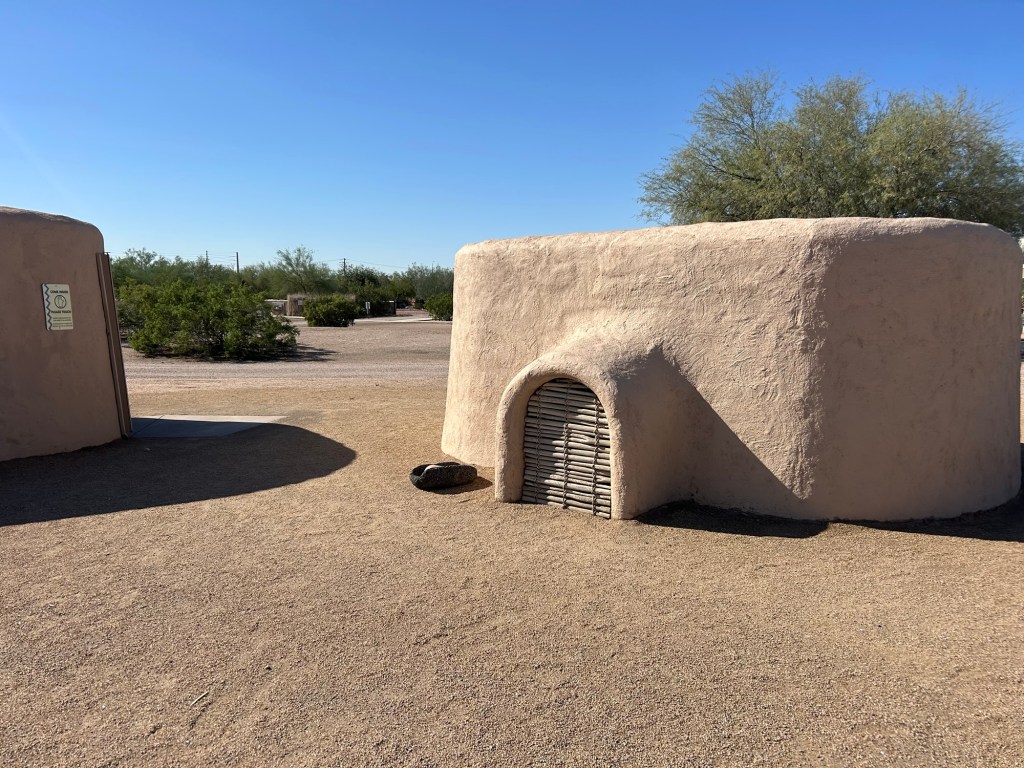
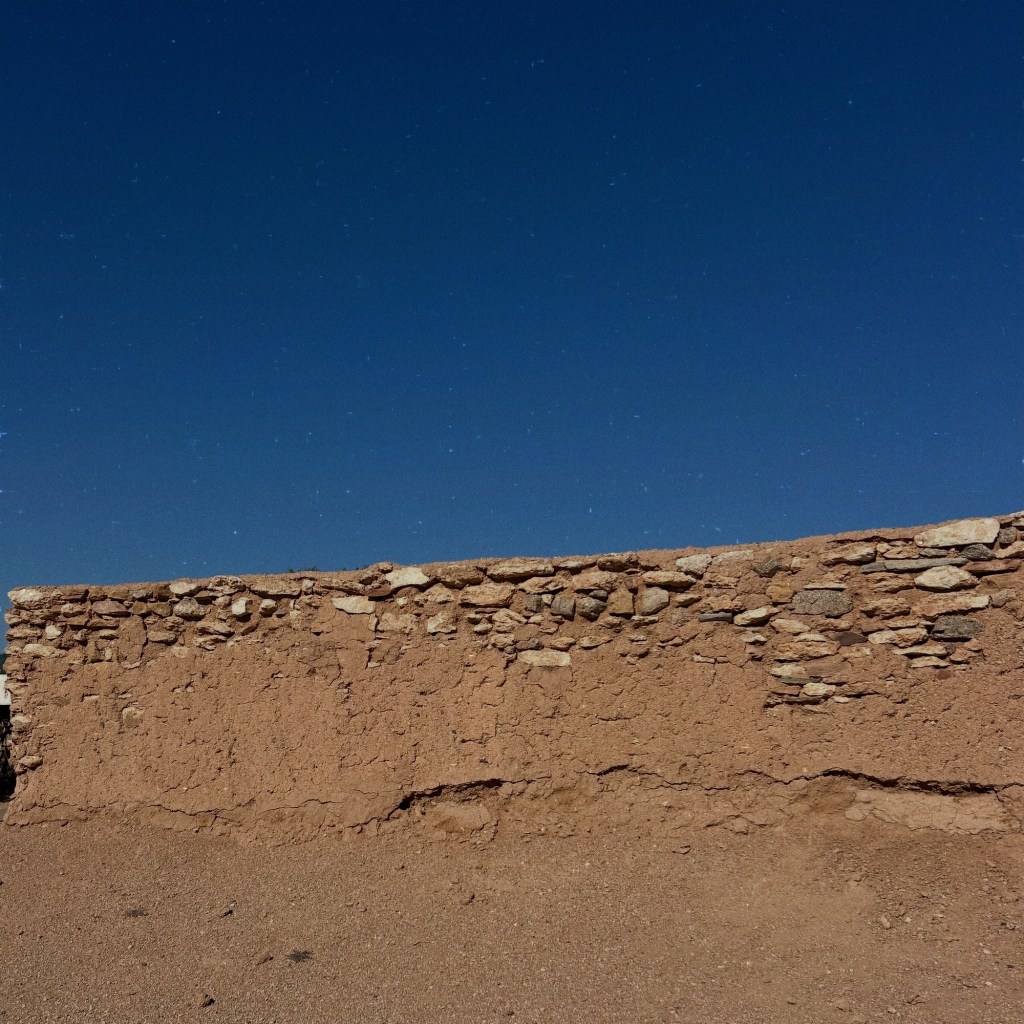
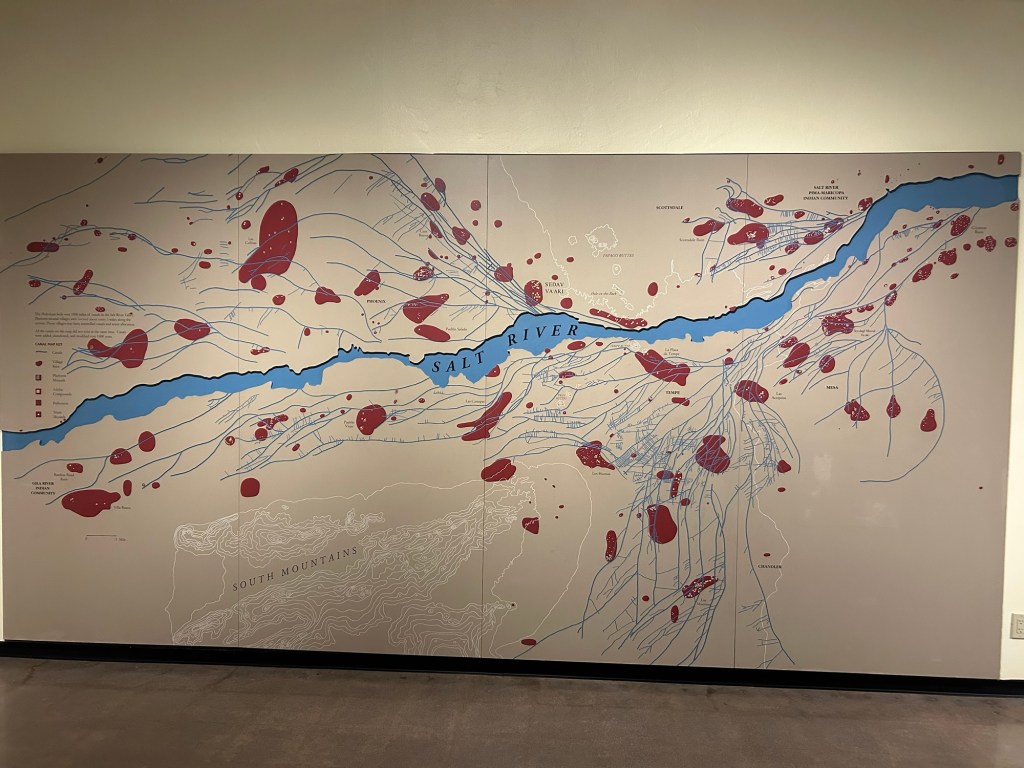
The story of Phoenix started some 2,000 years ago, around 1 AD. Groups of people from the Santa Cruz Valley area migrated North, forming settlements around the Gila River and the Salt River. The architecture style of this group is called Hohokam, and the people are Huhugam or in more general terms, Ancestral Sonoran Desert People. At first, there were smaller settlements, but over time they grew and began to form canals and grow their population and expand their irrigation efforts. They were community efforts, with everyone contributing to them in some capacity, either designing, building, or maintaining. By around 500 AD, they start to trade as far as Mexico and the Pacific coast. Archeologists have found copper bells (from Mexico) and shells (from the Pacific). Cotton is also introduced to the area from Mexico, and the Huhugam people learn to grow this at a high level, as it becomes a major export years later. They also start to build ball courts, whose use has been debated. Some people say it was used for sport, and people from neighboring settlements competed against each other. Some people say that it was used for ceremonies such as weddings or for dance. You can see an actual excavated ball court at the S’edav Va’Aki museum in Phoenix, just north of Sky Harbor Airport. As time went on, they irrigated the Salt River and Gila River thousands of miles within the Phoenix area. At its peak, around 1300 AD, the population in the area got as high as 80,000 people. There is debate about what happens next – some people say it was extreme weather – either years of flooding or drought. Some people say it was something like war or disease. Some say societal collapse. But the truth is there are holes in all of these theories, and we may never know what actually happened. But, around 1400-1450, the Phoenix Valley basin was largely abandoned for the next 400 years.
https://www.phoenix.gov/administration/departments/sedav-vaaki.html
https://statemuseum.arizona.edu/online-exhibit/culture-history-southern-arizona/hohokam
 P. Eilatan
Leave a comment